

by Cassie Story, RD, Nutrition Subject Matter Expert
When people talk about exercise, the conversation often focuses on weight loss. While physical activity can support weight management, the benefits of exercise extend far beyond what happens on the scale.
Regular movement supports cardiovascular health, blood sugar management, muscle strength, mobility, physical function and overall fitness. Many of these improvements can occur whether your weight changes or stays the same.
In fact, some of the most important benefits of exercise happen independently of weight loss. That means your workouts may be helping your health in meaningful ways even if the number on the scale remains unchanged.
Exercise Changes More Than Body Weight
Physical activity affects nearly every system in the body.
Regular exercise can improve cardiovascular fitness, lower blood pressure, support insulin sensitivity and improve cholesterol and triglyceride levels. It also helps maintain and build muscle mass, which becomes increasingly important with age and during weight loss.
Exercise can strengthen bones, improve balance and mobility, support mental well-being and make everyday activities feel easier. Whether it’s carrying groceries, climbing stairs or playing with your children or grandchildren, physical function matters.
These benefits are especially important because obesity is associated with increased risk for conditions such as type 2 diabetes, cardiovascular disease and osteoarthritis. Improvements in health markers can occur even when body weight remains stable.
Research has shown that physical activity can improve cardiometabolic health in people with obesity independent of weight loss. In other words, movement can improve health even when it does not produce a smaller body size.
Weight Is Only One Measure of Progress
Body weight is influenced by many factors, including nutrition, sleep, stress, medications, hormones, genetics and underlying health conditions.
Because of this, changes in fitness and health do not always show up as changes on the scale. Someone may become stronger, improve cardiovascular fitness, lower blood pressure or improve blood sugar management while maintaining a similar body weight.
This does not mean exercise is not working. In fact, focusing only on the scale can cause people to miss important signs of progress that may have a larger impact on long-term health.
Signs Your Exercise Routine Is Paying Off
Instead of relying exclusively on body weight, consider some of the other ways physical activity may be improving your health:
- You can walk farther or move more comfortably.
- Climbing stairs feels easier.
- You feel stronger during daily activities.
- Your resting heart rate or blood pressure improves.
- Your blood sugar is easier to manage.
- Your cholesterol or triglyceride levels improve.
- Your balance, flexibility or mobility improves.
- You recover more quickly after physical activity.
- You sleep better.
- Your mood and energy levels improve.
- Activities that once felt difficult now feel more manageable.
These changes often happen gradually, making them easy to overlook. However, they are meaningful indicators that your body is adapting to regular movement.
What Type of Exercise Should You Do?
There is no single “best” exercise for everyone.
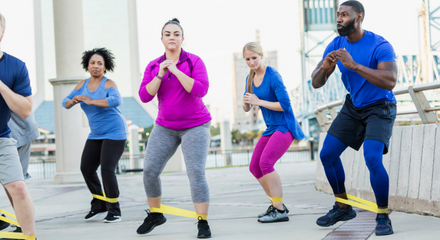
Most health experts recommend a combination of aerobic activity and resistance training. Aerobic activities include walking, swimming, cycling, dancing and many recreational sports. Resistance training can involve free weights, resistance bands, weight machines or bodyweight exercises.
The most effective exercise program is one that is appropriate for your health, fits your abilities and is something you can continue doing consistently.
If joint pain, limited mobility or another medical condition makes exercise challenging, modifications are often available. A healthcare professional, exercise specialist or physical therapist can help identify safe and effective options.
Conclusion
Exercise can improve health, fitness and physical function regardless of whether it leads to weight loss. While the scale may be one way to measure progress, it is far from the only one. Every walk, workout and movement session contributes to your health, even when the results are not reflected by a number.
Reference:
Swift, DL, et al. Role of Physical Activity in Obesity Treatment and Cardiometabolic Health: A Scientific Statement From the American Heart Association. Circulation. 2026;154(1): e1–e16.