


Holiday dishes often follow long-standing family recipes. Many of these meals can be prepared in new ways that support overall health, maintain flavor and keep cooking simple. Small adjustments in ingredients or techniques can add more fiber, reduce saturated fat or increase freshness all without changing the intention or enjoyment of the meal.
Simple Ingredient Swaps
Below are easy changes that fit into common holiday dishes. None of these swaps alter the core flavors or traditions; they simply use ingredients that offer additional nutrients or lighter textures.
- Use Greek yogurt in place of sour cream in dips or dressings.
Greek yogurt provides a similar creamy texture and works well in savory dishes like onion dip, herb dips or topping for baked potatoes. - Roast vegetables instead of glazing or sautéing them.
Roasting brings out natural sweetness, adds browning and depth, and requires minimal added ingredients. This works especially well for carrots, Brussels sprouts, parsnips and squash. - Choose olive oil for cooking instead of butter when possible.
Olive oil performs well in roasting, sautéing and salad dressings. It supports heart health and pairs easily with herbs and citrus. - Season with herbs, spices and citrus.
Rosemary, thyme, sage, citrus zest and cracked pepper can provide brightness and depth without the need for additional salt or sugar. - Swap part of the cream in soups or casseroles with puréed vegetables.
Blended cauliflower, white beans or squash can add body and creaminess while increasing fiber and micronutrients. - Use whole grains when appropriate.
Whole-grain bread cubes in stuffing, brown rice in casseroles or barley in soups provide more fiber and a satisfying texture. - Try a lighter approach to sweetness.
In baked dishes like sweet potato casseroles or cranberry sauce, reduce added sugar and rely more on the natural sweetness of fruit. Spices such as cinnamon and nutmeg can enhance flavor without additional sweeteners. - Incorporate nuts or seeds for texture.
Adding toasted pecans, walnuts or pumpkin seeds to salads, vegetable dishes, or grain bowls provides crunch and healthy fats in small amounts.
Simple Herb & Citrus Roasted Carrots
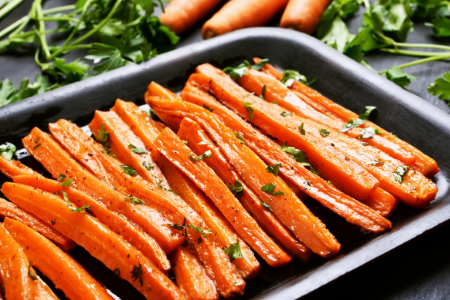
Roasting brings out the natural sweetness of carrots while citrus zest and herbs offer brightness and aroma. It fits easily into holiday meals and pairs well with most main dishes.
Ingredients
- 1-pound carrots, peeled and sliced into sticks
- 1 tablespoon olive oil
- Zest of 1 orange
- 1 teaspoon honey (optional)
- 1 teaspoon fresh thyme or rosemary
- Salt and pepper to taste
Directions
- Preheat oven to 400°F.
- Toss carrots with olive oil, orange zest, thyme, salt and pepper.
- Spread on a baking sheet in a single layer.
- Roast for 20–25 minutes, stirring once halfway through.
- For a hint of sweetness, drizzle with honey during the last 5 minutes of roasting.
Greek Yogurt Citrus Dip
This dip adds creaminess and brightness without overpowering the natural flavor of the carrots. The citrus ties both parts of the dish together, and the cool yogurt contrasts nicely with the warm roasted vegetables.
Ingredients
- ½ cup plain Greek yogurt
- 1 tablespoon orange juice (fresh is best)
- 1 teaspoon orange zest
- 1 teaspoon honey
- Pinch of salt
Directions
- In a small bowl, whisk together Greek yogurt, orange juice, orange zest, honey and a pinch of salt.
- Taste and adjust sweetness or acidity as needed.
- Serve chilled alongside the warm roasted carrots or drizzle lightly over the top right before serving.
Why These Adjustments Work
These changes emphasize flavor, texture and satisfaction. Roasting creates caramelization, citrus provides brightness and yogurt adds creaminess. While the herbs and spices enhance the aroma of the dish. None of these shifts require new or complicated recipes, just small updates to familiar favorites.
Bringing It All Together
Holiday meals are an opportunity to share food and connect with others. These recipe swaps aren’t about restriction or redefining traditions. They are simply practical ways to add freshness, fiber, or plant-based fats into dishes you already prepare. Even one or two changes can support energy and digestion while keeping the meal familiar and enjoyable.
By Cassie Story, RD, Nutrition Subject Matter Expert